
Concrete Lifting & Leveling Services
- CONCRETE LIFTING SERVICES
A sunken driveway or cracked sidewalk isn’t just annoying; it’s a tripping hazard waiting to happen. We lift and level settled concrete back into place, using methods that are faster, cleaner, and far less expensive than a full replacement. Your driveway, patio, or walkway can look and function like new again. We serve homeowners across our local service areas with practical concrete repair solutions.
Licensed & Insured
Warranty-Backed Repairs
Local Expertise
Free Inspections
Financing Available
- CONCRETE REPAIR
What Is Concrete Lifting & Leveling?
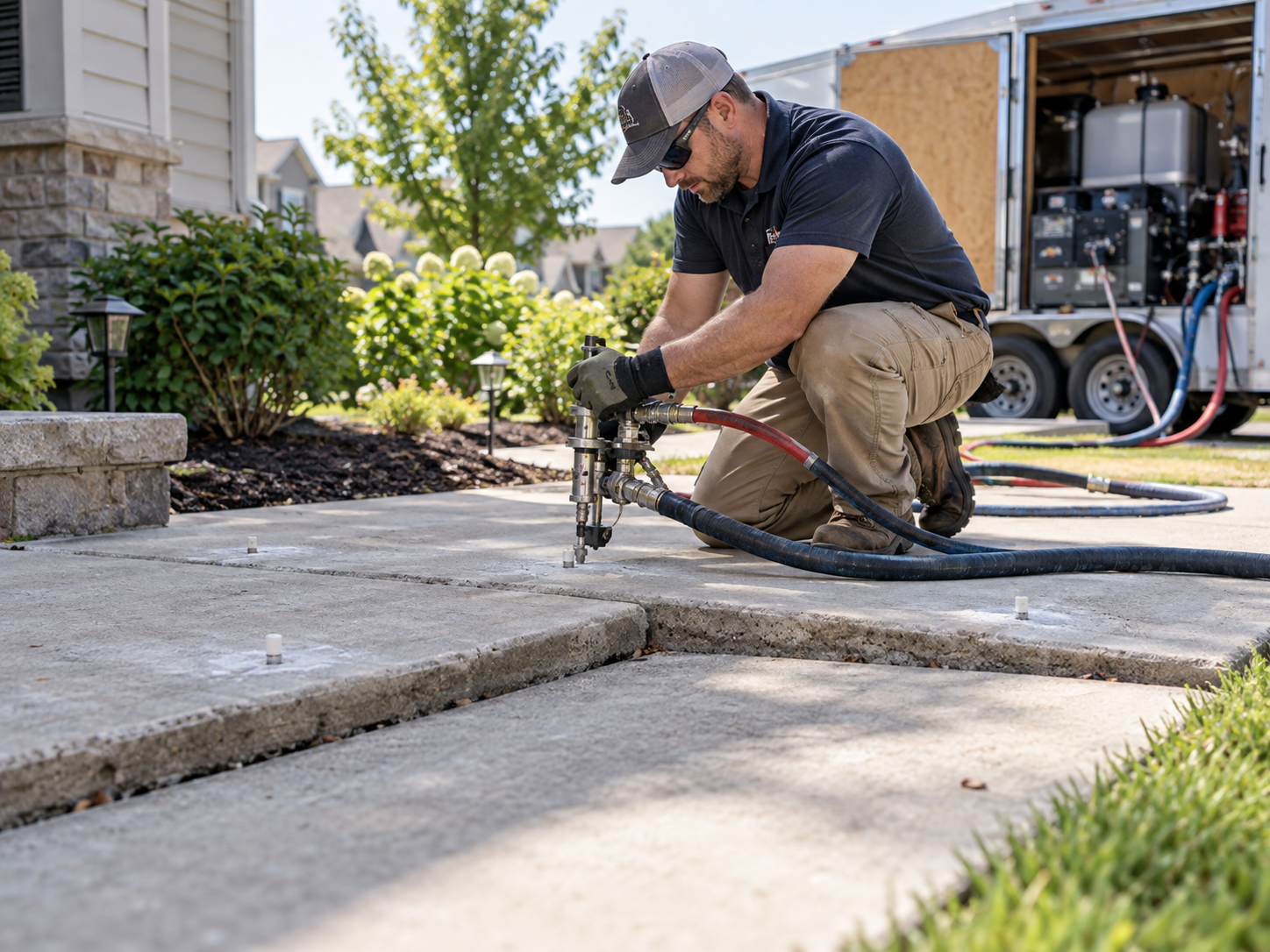
Concrete lifting and leveling is a repair process used to raise sunken or uneven concrete slabs back to their original position without tearing them out and pouring new concrete. It works by injecting material underneath the slab, filling gaps and voids in the soil, which lifts the concrete back into place.
The right method depends on the type of concrete, amount of settlement, soil condition, size of the slab, and accessibility of the area. The goal is to restore a more usable, level surface while addressing the conditions that caused the concrete to settle.
- WARNING SIGNS
Signs Your Concrete May Need Lifting or Leveling
Sunken, uneven, or cracked concrete can create trip hazards, drainage issues, and visible gaps beneath slabs. These signs may indicate that your concrete needs lifting or leveling.
Sunken Concrete
A slab that has dropped below the surrounding surface can indicate settlement or loss of support beneath the concrete.
Gaps Beneath Concrete
Visible gaps under a slab can indicate that soil has settled or moved away from the underside.
Uneven Slabs
Concrete that slopes, dips, or sits at different heights can make a driveway, walkway, or patio harder to use.
Poor Surface Drainage
Settled concrete can change the slope of a surface and cause water to collect where it should not.
Trip Edges
Raised edges between slabs can create an uneven walking surface and may need to be evaluated.
Separated Concrete
Cracks and separation can occur with settlement, soil movement, or other conditions and should be evaluated before choosing a repair.
- COMMON CAUSES
What Causes Concrete to Sink or Settle?
Soil Settlement
Loose or poorly compacted soil can settle beneath a concrete slab and leave the surface without consistent support.
Soil Erosion
Water moving beneath concrete can wash away supporting soil and create empty spaces below the slab.
Poor Drainage
Water that collects around or beneath concrete can contribute to soil movement and settlement.
Freeze-and-Thaw Conditions
In colder areas, repeated freezing and thawing can affect soil and concrete surfaces.
Improper Installation or Compaction
If the supporting base was not properly prepared or compacted, the soil beneath the slab may settle over time.
Changing Moisture Conditions
Repeated wet and dry conditions can cause some soils to expand, shrink, or change in stability.
- OUR SOLUTIONS
Concrete Lifting Solutions We Offer
Driveway Concrete Repair
Lifting and leveling sunken driveway slabs so your driveway sits flat and functions again.
Sidewalk Leveling
Fixing uneven or raised sidewalk sections that create trip hazards for your family and visitors.
Patio Concrete Leveling
Restoring a smooth, even patio surface without tearing out and replacing the concrete.
Garage Floor Leveling
Lifting sunken garage floor sections back into place for a safer, more functional space.
- OUR PROCESS
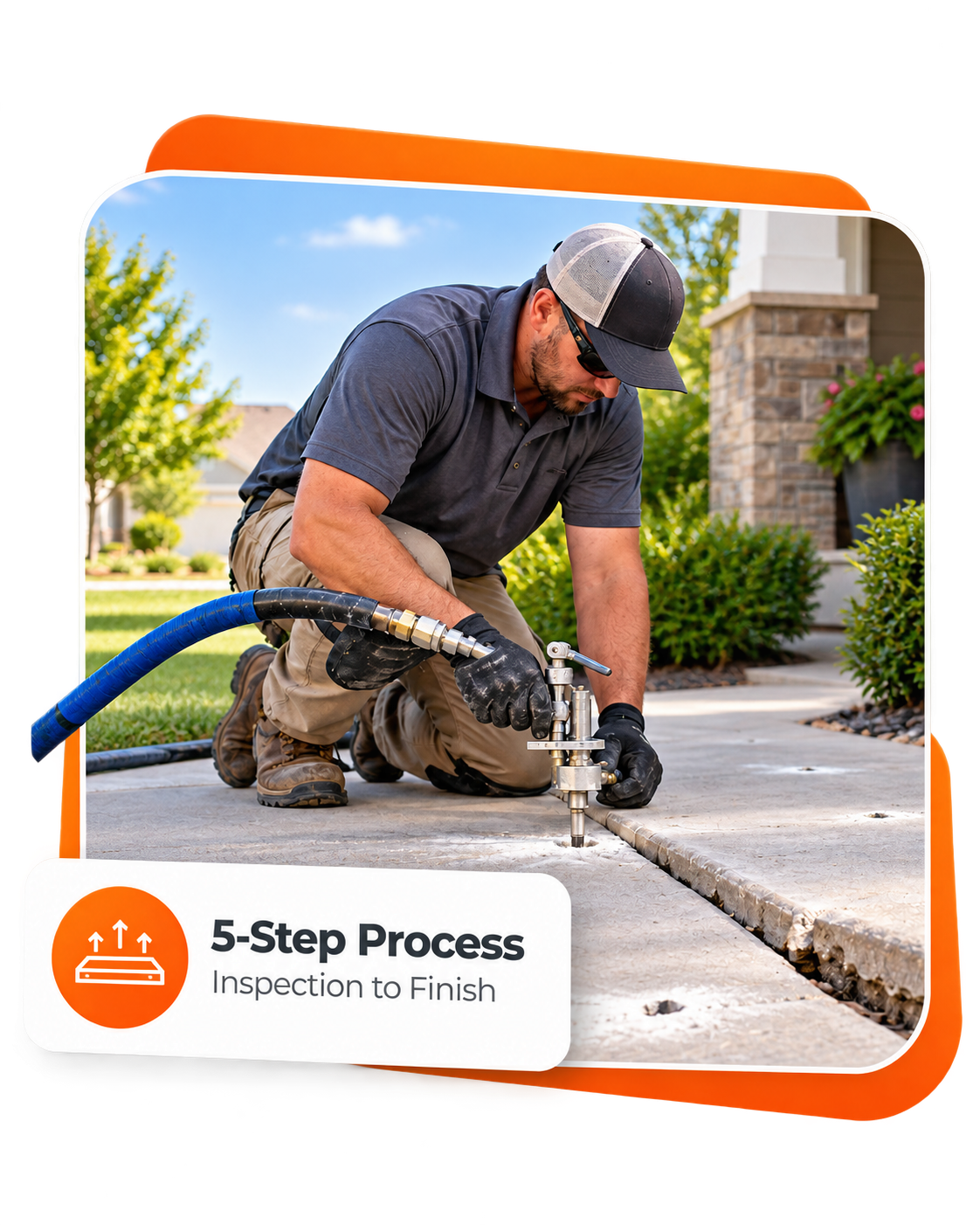
How Our Concrete Lifting Process Works
Free Inspection
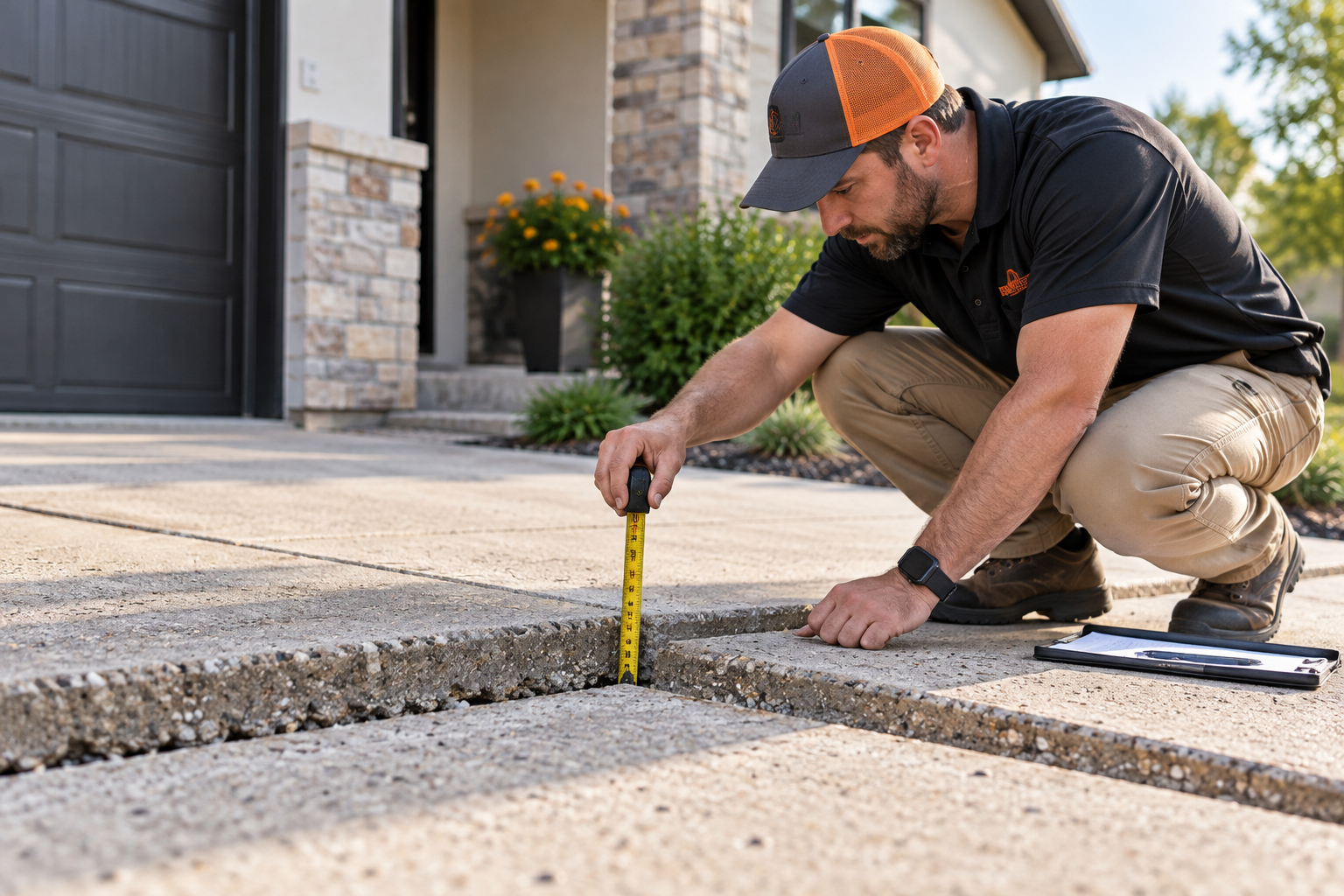
We assess the sunken or uneven areas and check what's happening underneath.
Diagnosis
We explain why the concrete settled in the first place.
Custom Lifting Plan
We recommend the right method and injection points for your specific slab.
Lifting & Leveling
Small holes are drilled, material is injected, and the slab is raised back into place.
Warranty & Finish
Holes are patched, the area is cleaned up, and your repair is backed by warranty.
- WHY IT MATTERS
Why You Shouldn’t Wait
Removes trip hazards — protects your family and visitors from injury
Costs far less than replacement — lifting is a fraction of the price of tearing out and repouring concrete
Faster turnaround — most lifting jobs are done in hours, not days
Improves drainage — leveled concrete directs water away instead of letting it pool
Boosts curb appeal — a level driveway or patio simply looks better and adds to your home's value
- PRICING
What Does Concrete Lifting Cost?
Concrete lifting costs depend on the size of the area, how much the slab has sunk, and which method is used. In most cases, lifting is significantly more affordable than a full concrete replacement, since there’s no demolition or new material involved. The best way to know your exact cost for concrete lifting and leveling is a free, no-obligation inspection.
- Frequently Asked Questions
Concrete Lifting FAQs
If you notice sunken slabs, uneven surfaces, cracks, or trip hazards on your driveway, sidewalk, or patio, concrete lifting is likely the fix. A free inspection can confirm the cause and the right solution.
Mudjacking uses a heavier cement-based mixture, while modern concrete lifting typically uses lightweight polyurethane foam. Foam cures faster, weighs less, and puts less additional stress on the soil underneath.
Yes, in most cases. Lifting reuses your existing concrete instead of demolishing and repouring it, which significantly lowers the cost and the time it takes to complete.
Most concrete lifting jobs are completed within a few hours, and you can typically use the surface again shortly after, much faster than waiting for new concrete to cure.
Lifting addresses the immediate problem by filling voids and raising the slab. If the sinking is caused by ongoing drainage or soil issues, we may also recommend a drainage fix to prevent it from happening again.
It works well on most flatwork driveways, sidewalks, patios, and garage floors. Your specialist can confirm if your specific surface and situation are a good fit during the inspection.